The watch doesn’t end after the infusion.
Doctors report adverse events in a few taps. Every report lands in a structured safety review, linked to the product unit, its administration record and the follow-up schedule.
Long-term follow-up still runs on paper.
Advanced therapies need years of follow-up, but reporting still depends on forms, phone calls and memory. Reports arrive late, incomplete, or never, and safety teams see the picture too slowly.
From a single report to a safety signal.
Scan the code on the product
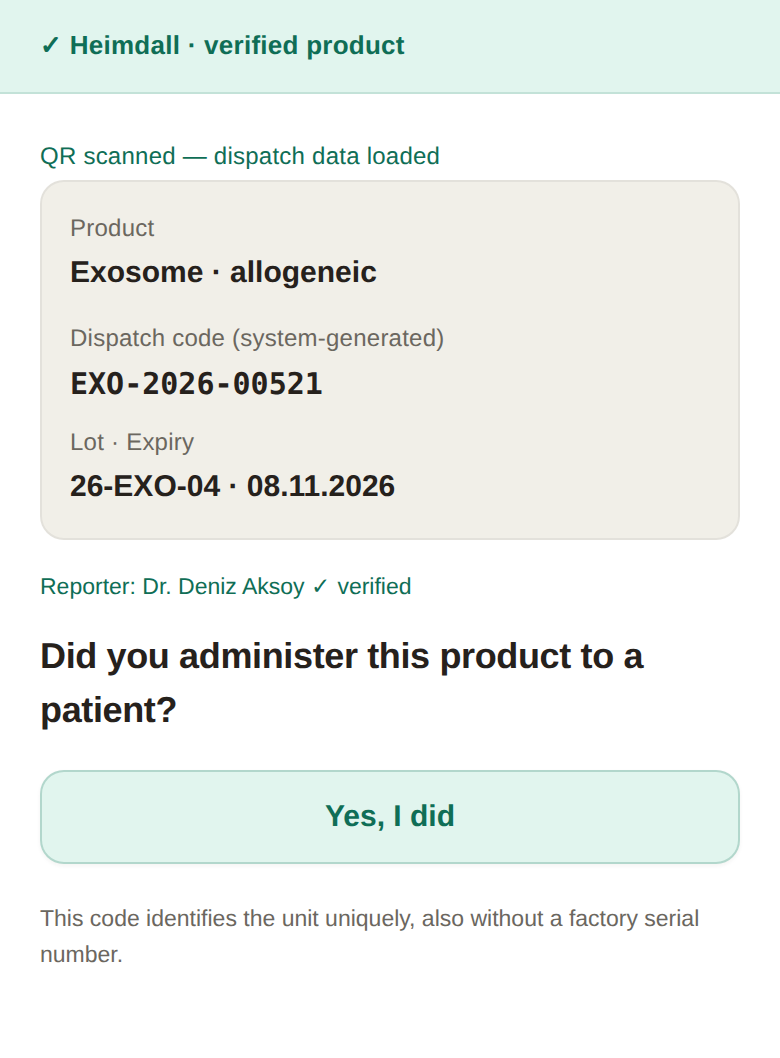
The doctor scans the QR code that ships with the unit. Product, dispatch code, lot and expiry date arrive prefilled.
One email link verifies the doctor. There is no password, and the device stays signed in for 14 days.
Tap what you observed
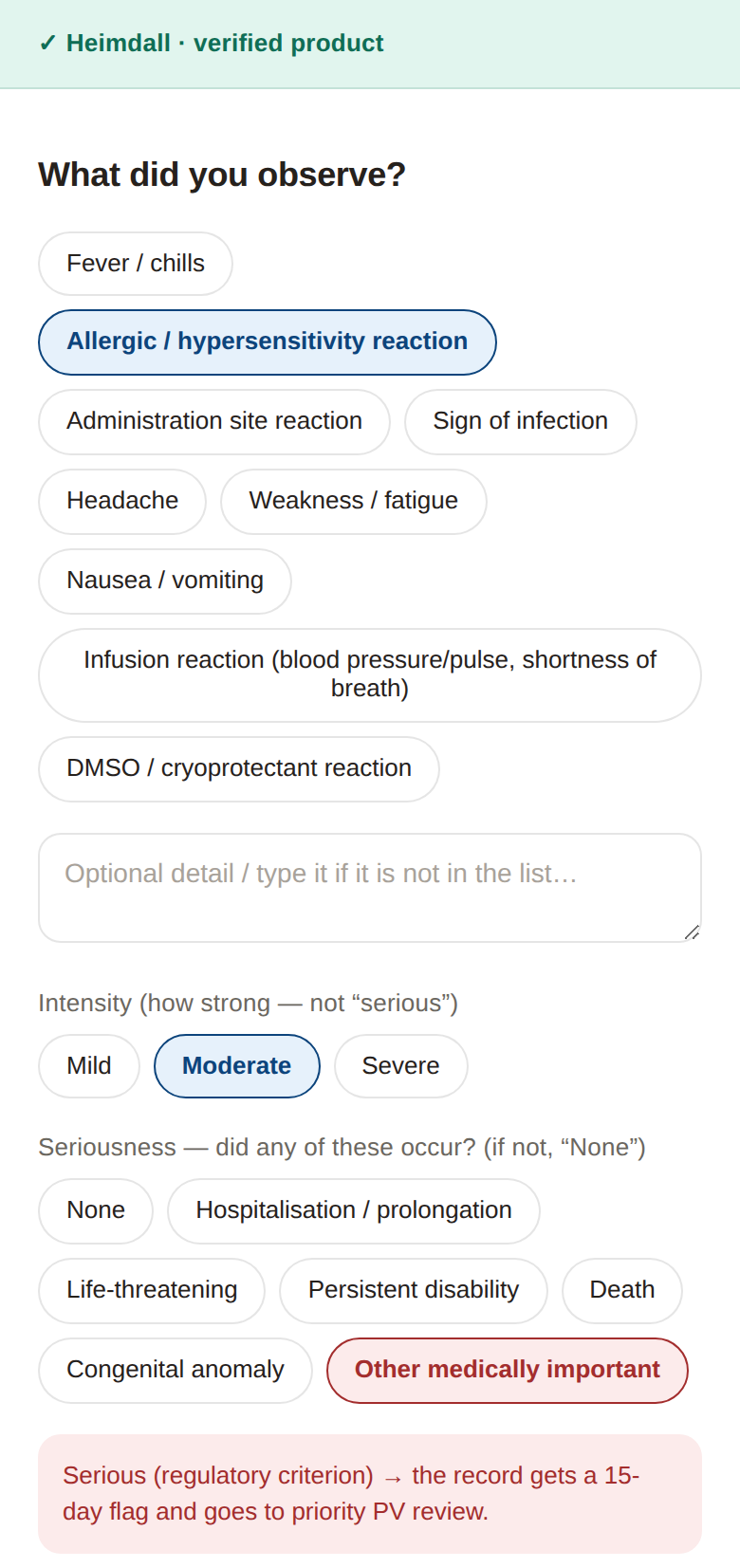
The event list follows the administration route. The doctor picks the event, its intensity, its seriousness and its current status, then signs the report.
Seriousness comes from the ICH E2B criteria, not from the intensity label. A serious event gets a 15-day flag and goes to priority review.
One question at each window
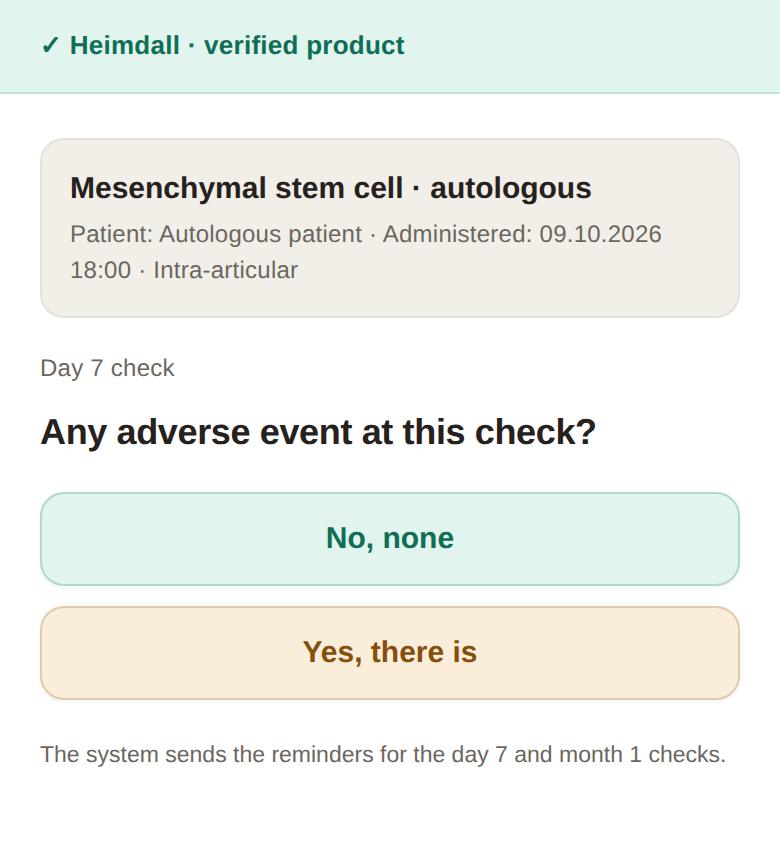
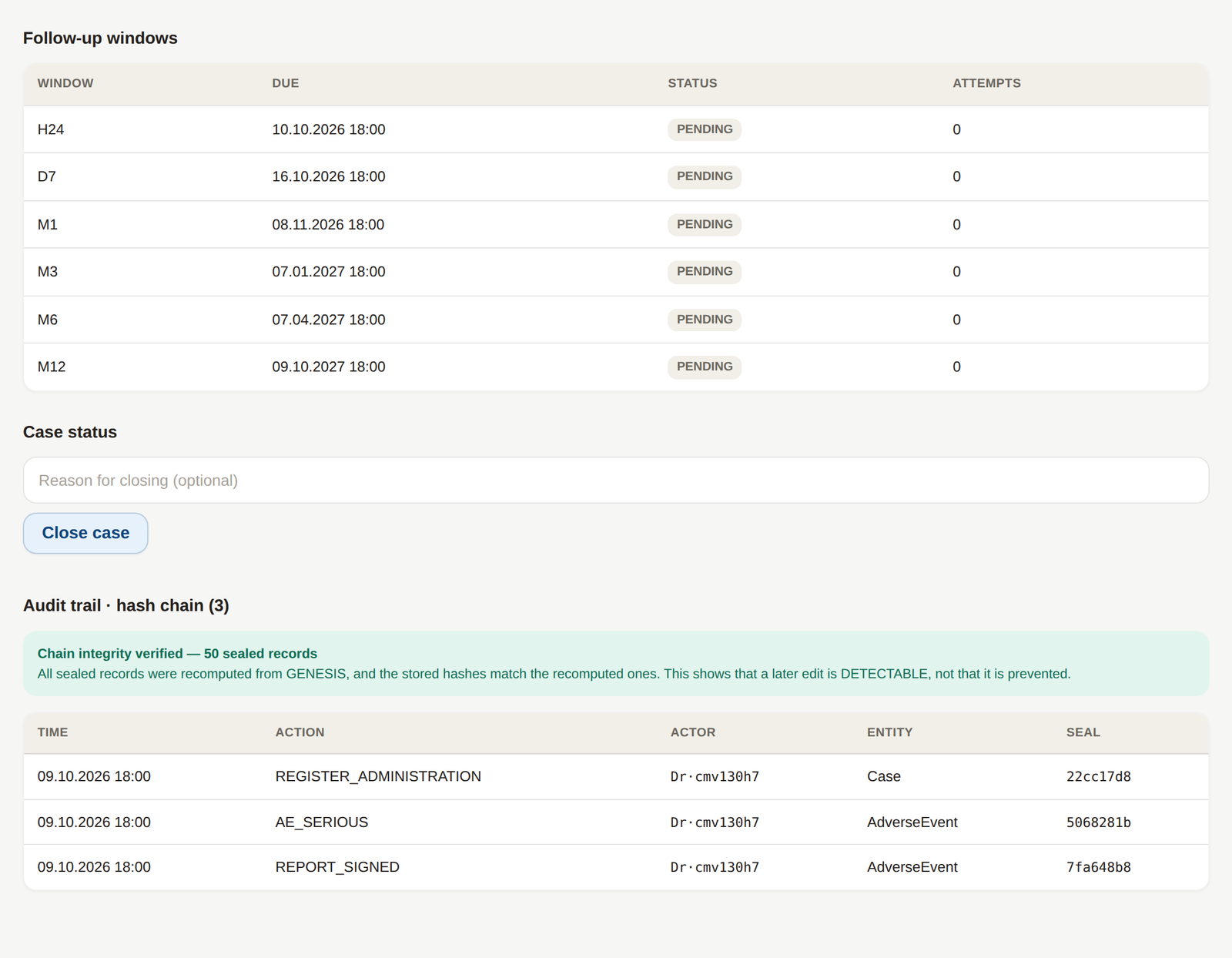
At 24 hours, day 7 and months 1, 3, 6 and 12, the system asks one question. Did an adverse event occur? One tap answers it.
The system sends the reminders by email. Nobody keeps a paper calendar.
One queue for the safety team
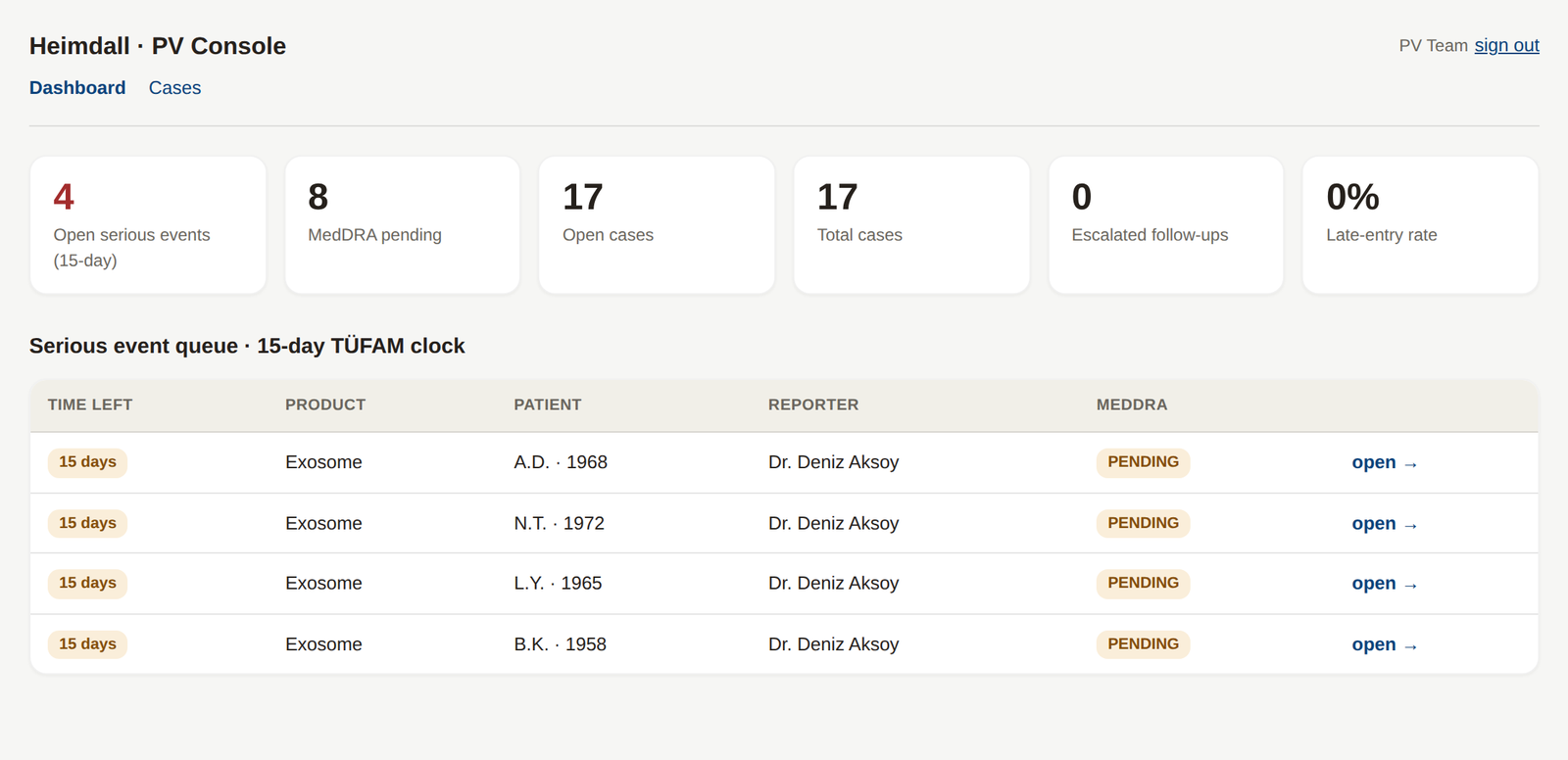
The console lists the open serious events with the days left on the 15-day clock. Each case shows its follow-up windows and its audit trail. The team sees initials and birth year, never the patient name.
A record you can check.
One unit, one patient
A unit is single-use. A second attempt to register it fails, also under concurrent requests. A database constraint enforces this.
Names stay with the doctor
Patient names are stored encrypted and show only in the session of the reporting doctor. Everywhere else the system uses initials and birth year.
Edits are detectable
Every action goes into a SHA-256 hash-chained audit log. A later edit to a row breaks the chain, and the console shows it.
No clinical decisions
The system records, schedules and routes. It gives no diagnosis and no treatment advice, and it does not submit to an authority automatically.
Built for the people who carry the follow-up.
Less chasing patients, more time for care. Pending follow-up checks surface on their own.
Structured, traceable safety data from every site, ready for your review process.
 HeimdallBIOVIGILANCE